Previous Article
Mumbai Coastal Road Garden Mumbai's Biggest Waterfront Park
Home
Next Article
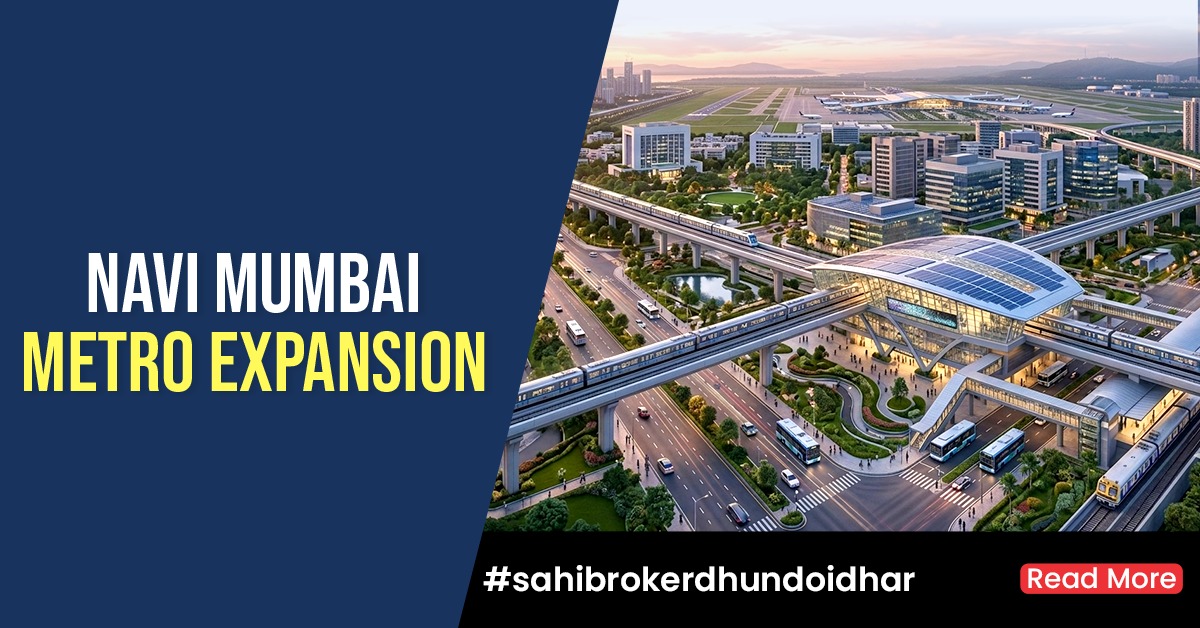
Navi Mumbai's Next Big Leap Is Here: A ₹5,575 Crore Metro Expansion That Could Redefine the City's Future
For years, Navi Mumbai has been planned as India's model satellite city. Today, that vision is taking another significant step forward. The Maharashtra Cabinet has approved a ₹5,575 crore expansion of the Navi Mumbai Metro, paving the way for stronger connectivity between residential neighbourhoods, commercial districts, railway stations, and the upcoming Navi Mumbai International Airport (NMIA).
This isn't simply an extension of the metro network. It is part of a much larger vision to create an integrated public transport system that supports one of India's fastest-growing urban regions. As infrastructure projects continue to converge—from the Mumbai Trans Harbour Link (Atal Setu) to the international airport and suburban rail upgrades—Navi Mumbai is steadily emerging as a major economic and residential destination. So, what exactly has been approved, and why is this project attracting so much attention?
What Has the Maharashtra Cabinet Approved?
The state government has approved two major extensions to the Navi Mumbai Metro network. The first is Metro Line 1A, which will extend the existing metro line from Sagar Sangam to CBD Belapur. The second is Metro Line 2, connecting Pendhar to the Navi Mumbai International Airport.
Together, these extensions will create a continuous metro corridor of nearly 28 kilometres, seamlessly linking Sagar Sangam with the upcoming airport. Once completed, passengers will be able to travel across key parts of Navi Mumbai using a single integrated metro network, improving convenience and reducing dependence on road transport. The project will add 13 new metro stations and is expected to serve nearly 12 lakh passengers every day, making it one of the largest urban transport investments currently underway in the Mumbai Metropolitan Region.
Why This Expansion Matters
Navi Mumbai has witnessed rapid residential and commercial growth over the past decade, but transportation infrastructure has had to keep pace with this expansion. The metro extension addresses this challenge by improving connectivity between important residential areas, business districts, railway stations, educational institutions, and the airport. For daily commuters, it promises shorter travel times, better last-mile connectivity, and a more reliable alternative to road traffic.
The upcoming Navi Mumbai International Airport is expected to become one of India's busiest aviation hubs in the coming years. Efficient metro connectivity to the airport will not only benefit air travellers but also support thousands of employees working in aviation, logistics, hospitality, and allied industries.
Part of a Much Bigger Infrastructure Story
The metro expansion becomes even more significant when viewed alongside the other transformational projects shaping Navi Mumbai. The operational Atal Setu has dramatically improved road connectivity between Mumbai and Navi Mumbai. The Navi Mumbai International Airport is nearing completion and is expected to ease pressure on Mumbai's existing airport. The Panvel–Karjat suburban rail corridor will strengthen regional rail connectivity, while ongoing road upgrades and planned commercial districts continue to expand the city's economic footprint.
Looking further ahead, the proposed Mumbai Metro Line 8 (Gold Line) is expected to connect Chhatrapati Shivaji Maharaj International Airport with Navi Mumbai International Airport. If completed as planned, it would create one of India's first direct metro links between two international airports, offering seamless travel across the Mumbai Metropolitan Region. Taken together, these projects are gradually transforming Navi Mumbai into a highly connected urban centre rather than just an extension of Mumbai.
What Could This Mean for Real Estate?
Across major cities worldwide, transport infrastructure has consistently influenced how cities grow. Better connectivity improves accessibility, attracts businesses, and often encourages new residential development around transit corridors.
Navi Mumbai is already witnessing this trend. Established locations such as CBD Belapur, Nerul, Kharghar, Kamothe, Taloja, and Pendhar are expected to remain in focus because of their improving transport links and proximity to major infrastructure projects. Areas surrounding upcoming metro stations may also experience increased demand from homebuyers seeking shorter commute times and better access to employment centres.
However, while metro connectivity often supports long-term property demand, real estate appreciation depends on several factors, including overall market conditions, supply, economic growth, and project execution. Buyers should therefore consider infrastructure as one of several factors before making investment decisions.
How the Metro Could Change Everyday Life
Beyond its impact on property markets, the expansion has the potential to improve daily life for thousands of residents. A larger metro network can help reduce travel time, lower dependence on private vehicles, ease traffic congestion, and contribute to lower vehicle emissions. Faster access to railway stations, business districts, educational institutions, hospitals, and the airport can make commuting more predictable and convenient. As Navi Mumbai continues to grow, public transport infrastructure like the metro will play an increasingly important role in supporting sustainable urban development.
What Happens Next?
With Cabinet approval now in place, the focus will shift towards detailed planning, construction, and execution. Large infrastructure projects of this scale are typically implemented in phases, and timelines may evolve depending on land acquisition, engineering work, and funding.
Once operational, the expanded metro network is expected to become one of the key pillars of Navi Mumbai's public transport system, complementing suburban rail, road infrastructure, and airport connectivity.
Conclusion
The approval of the ₹5,575 crore Navi Mumbai Metro expansion marks another important milestone in the city's transformation. By extending metro connectivity to the upcoming international airport and strengthening links between residential, commercial, and transport hubs, the project has the potential to reshape how people travel across Navi Mumbai. Combined with the airport, Atal Setu, suburban rail projects, and future metro corridors, it reflects a broader strategy to build a more connected and future-ready metropolitan region.
For commuters, this means greater convenience. For businesses, it creates improved accessibility. And for homebuyers and investors, it reinforces why Navi Mumbai continues to be one of the most closely watched real estate markets in the Mumbai Metropolitan Region. As construction progresses over the coming years, this metro expansion could become one of the defining infrastructure projects shaping Navi Mumbai's next chapter.
Frequently Asked Questions (FAQs)
1. What has been approved under the Navi Mumbai Metro expansion?
The Maharashtra Cabinet has approved Metro Line 1A from Sagar Sangam to CBD Belapur and Metro Line 2 from Pendhar to Navi Mumbai International Airport, creating a continuous metro corridor.
2. What is the total cost of the project?
The approved metro expansion has an estimated project cost of ₹5,575 crore.
3. How long will the expanded metro corridor be?
The combined network will create an integrated metro corridor of approximately 28 kilometres.
4. How many new stations will be added?
The project includes the construction of 13 new metro stations.
5. How many passengers is the network expected to serve?
Official estimates suggest that the expanded metro system could cater to around 12 lakh passengers daily once fully operational.
6. How will the metro benefit Navi Mumbai?
The expansion will improve connectivity between residential areas, commercial centres, railway stations, and the upcoming Navi Mumbai International Airport, making travel more efficient and reducing dependence on road transport.
7. Which areas could benefit from better metro connectivity?
Locations such as CBD Belapur, Nerul, Kharghar, Kamothe, Taloja, Pendhar, and nearby developing corridors are expected to benefit from improved accessibility.
8. Will the metro expansion increase property prices?
Improved metro connectivity has historically supported real estate demand in many cities. However, property prices depend on multiple factors, including market conditions, infrastructure delivery, supply, and buyer demand, so appreciation cannot be guaranteed.
Previous Article
Home
Next Article


New Here? Create Account


